Free printables
One printable per concept: one page for you, one activity page for your child. Print it out, no sign-up needed.
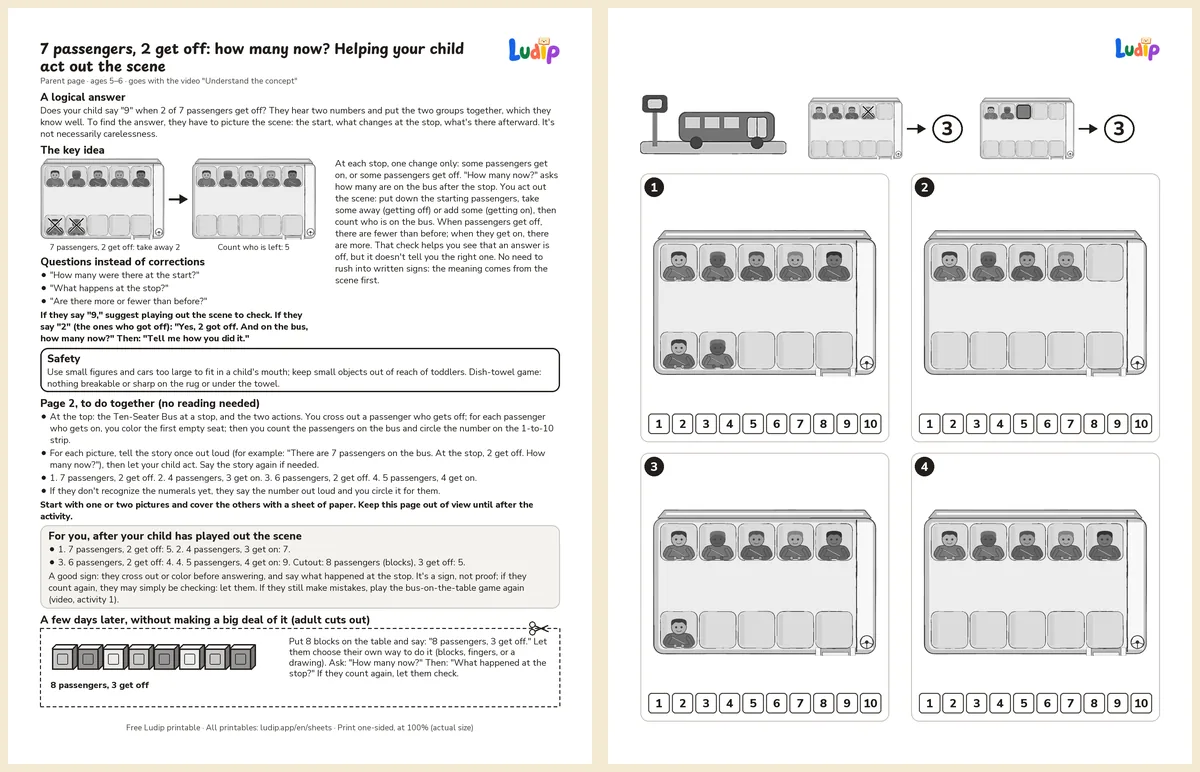 Getting on, getting off · Ages 5–6
How many now?
Help a 5–6 year old work out how many are on the bus after some passengers get on or off.
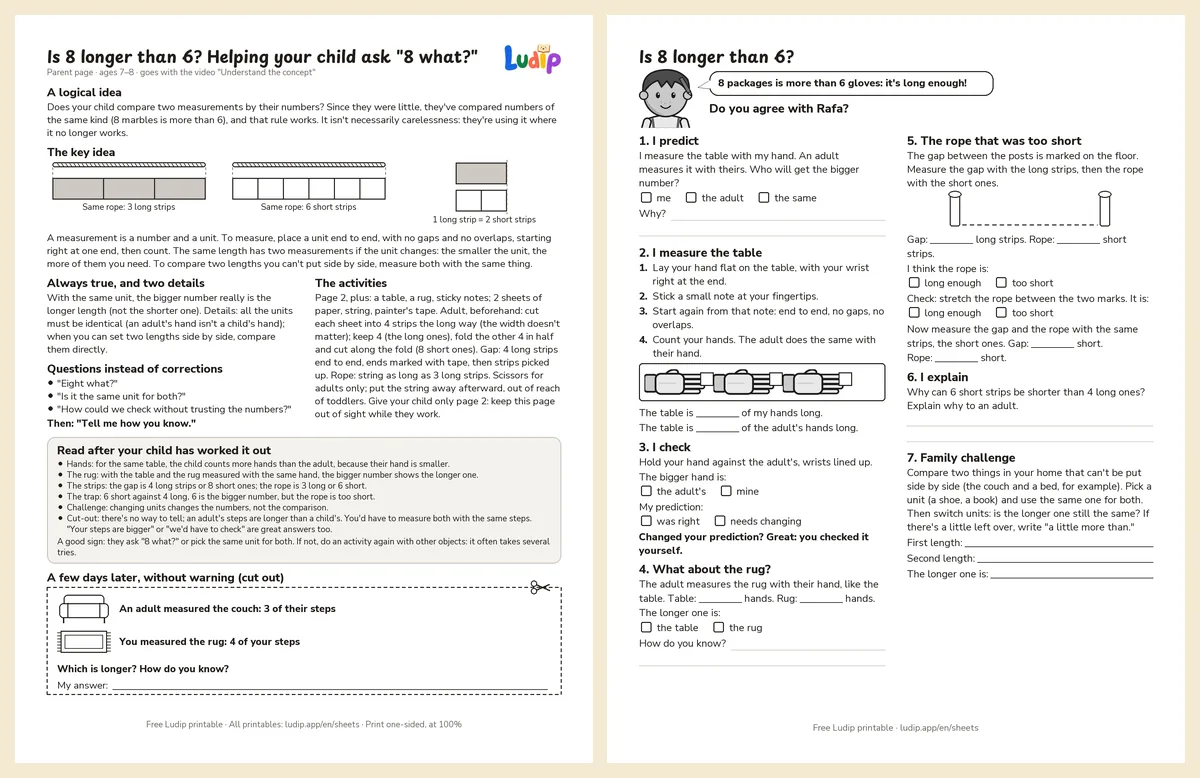 Measuring with the same unit · Ages 7–8
Is 8 longer than 6?
Help a 7–8 year old ask “8 what?” when comparing two measurements.
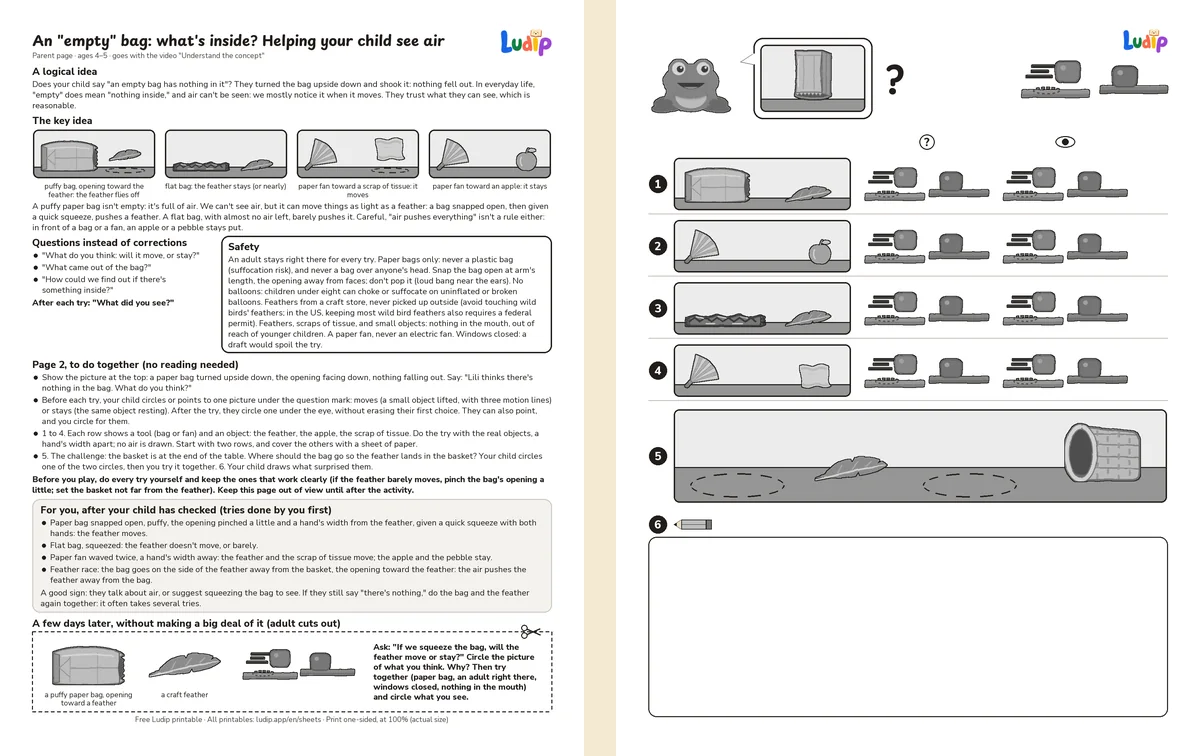 Science · Ages 4–5
An “empty” bag: what’s inside?
Help a 4–5 year old see the air in an “empty” bag.
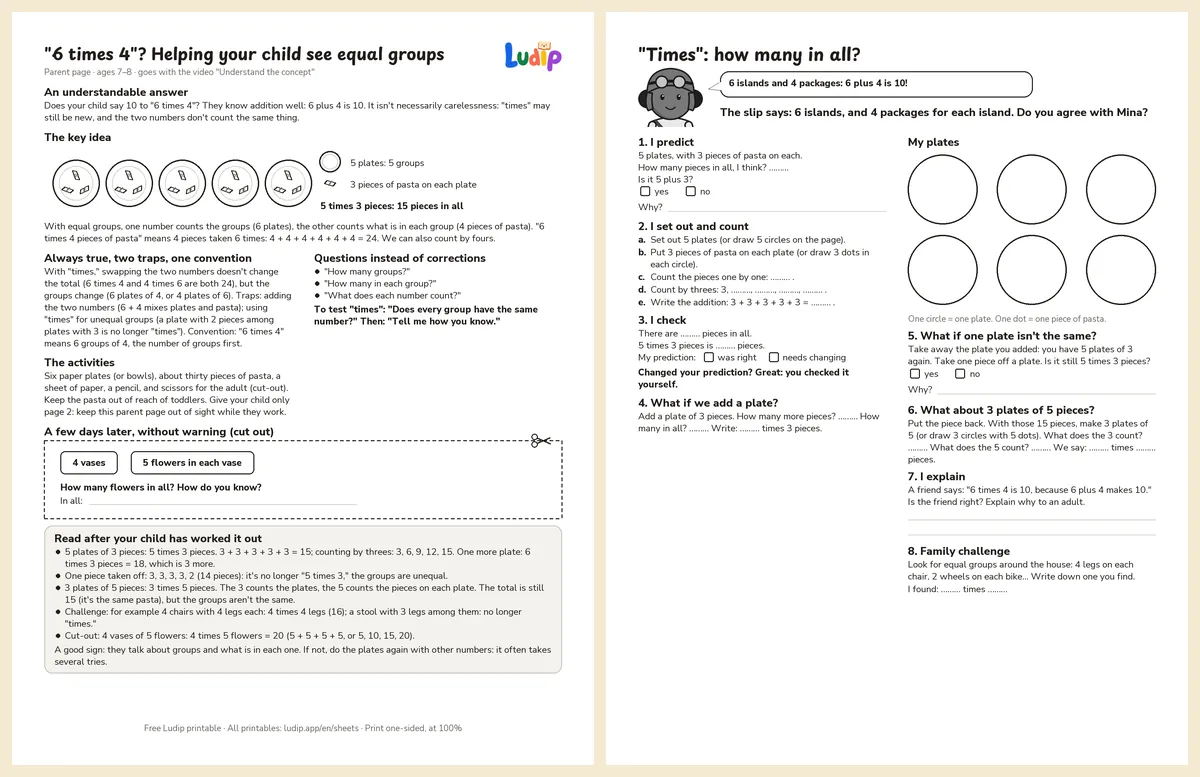 Equal groups · Ages 7–8
“6 times 4”?
Help a 7–8 year old see what “times” means with equal groups.
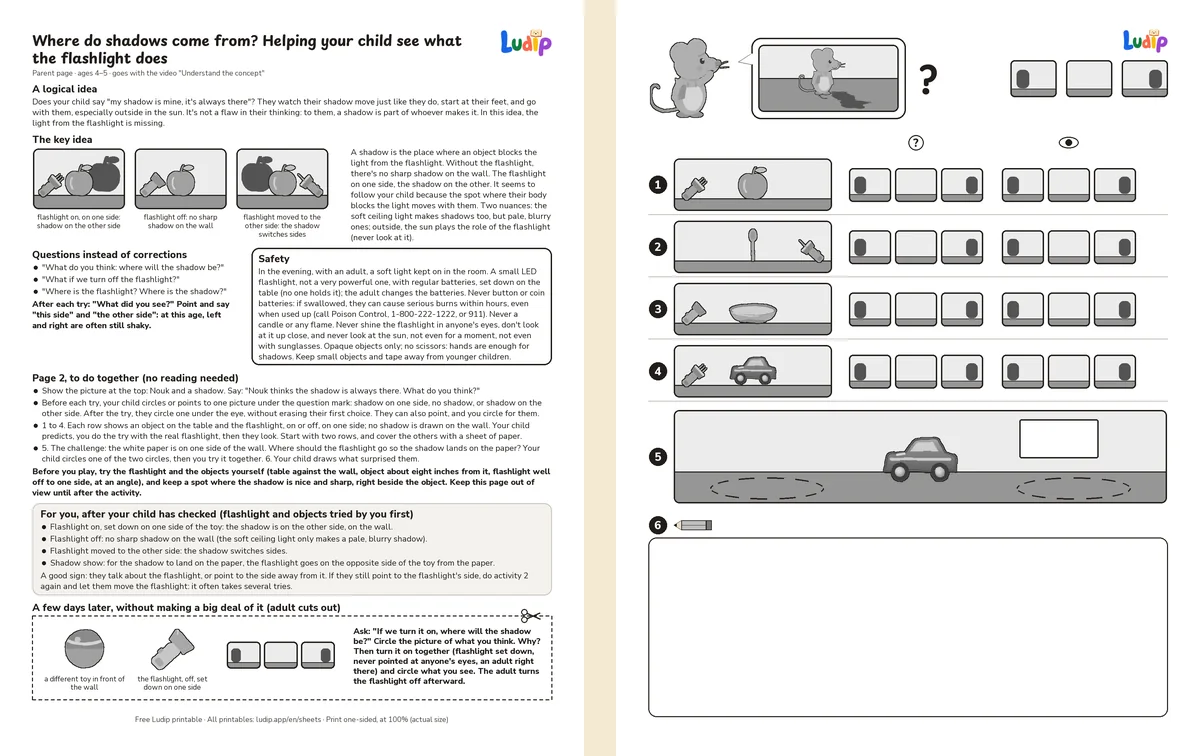 Science · Ages 4–5
Where do shadows come from?
Help a 4–5 year old see where shadows come from.
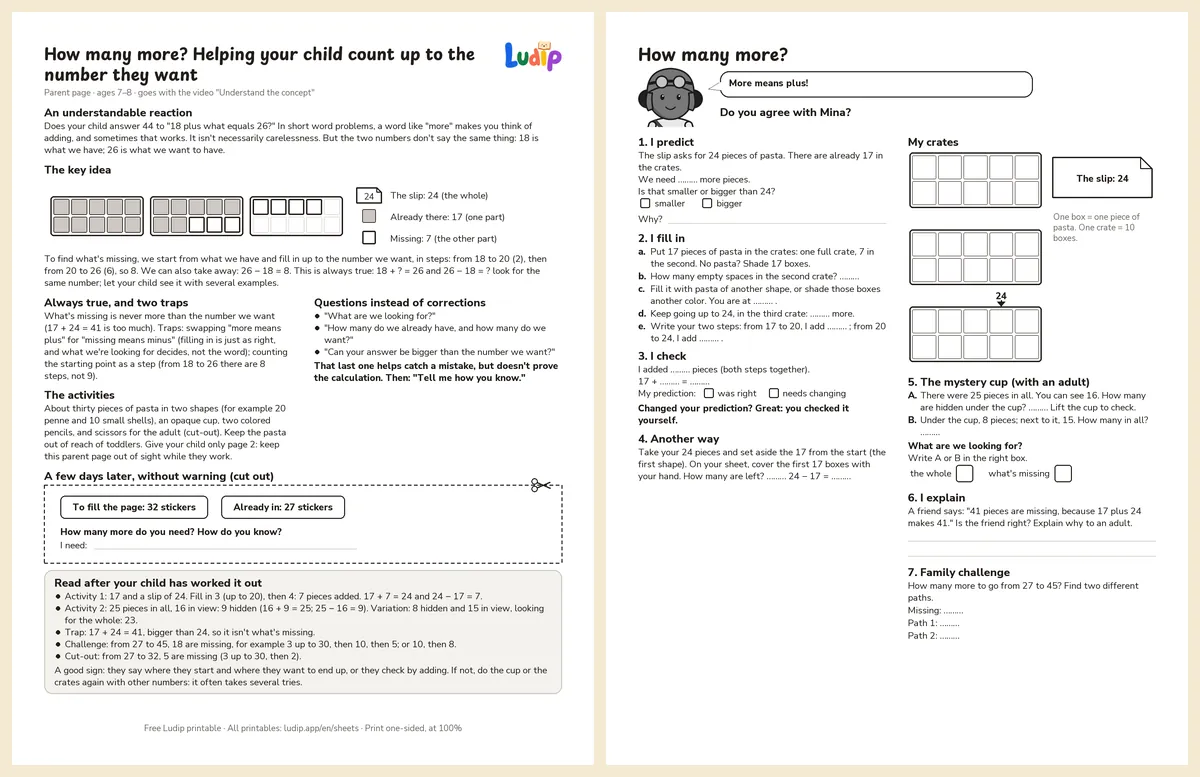 How many more? · Ages 7–8
18 plus what equals 26?
Help a 7–8 year old find what's missing by counting up to the number they want.
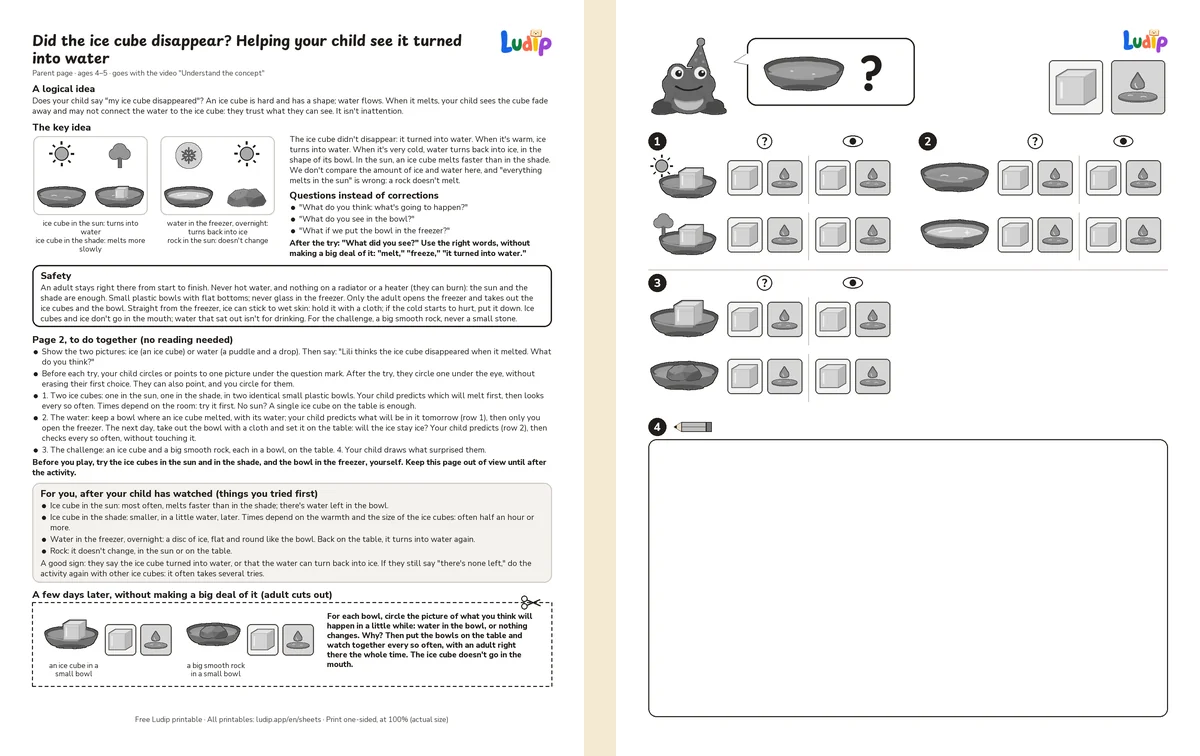 Science · Ages 4–5
The melting ice cube
Explore with a 4–5 year old what happens to a melting ice cube.
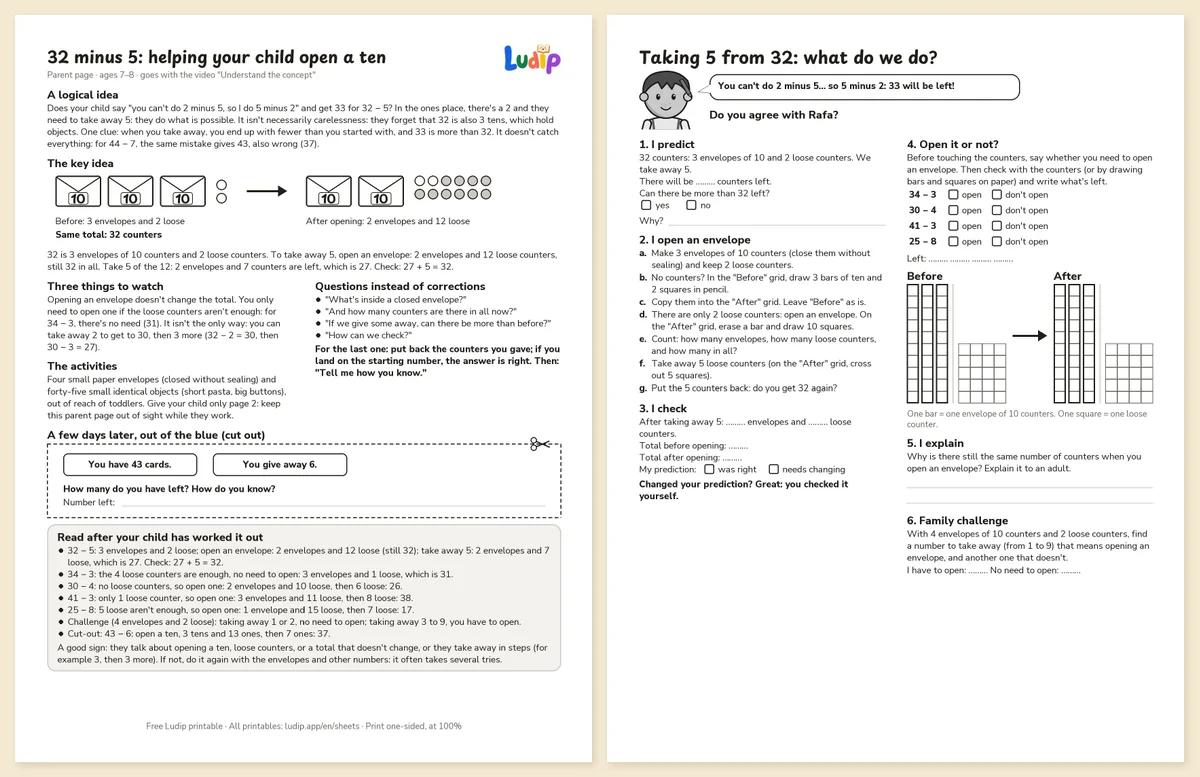 Opening a ten · Ages 7–8
32 − 5: what if there are only 2 ones?
Help a 7–8 year old subtract by opening a ten.
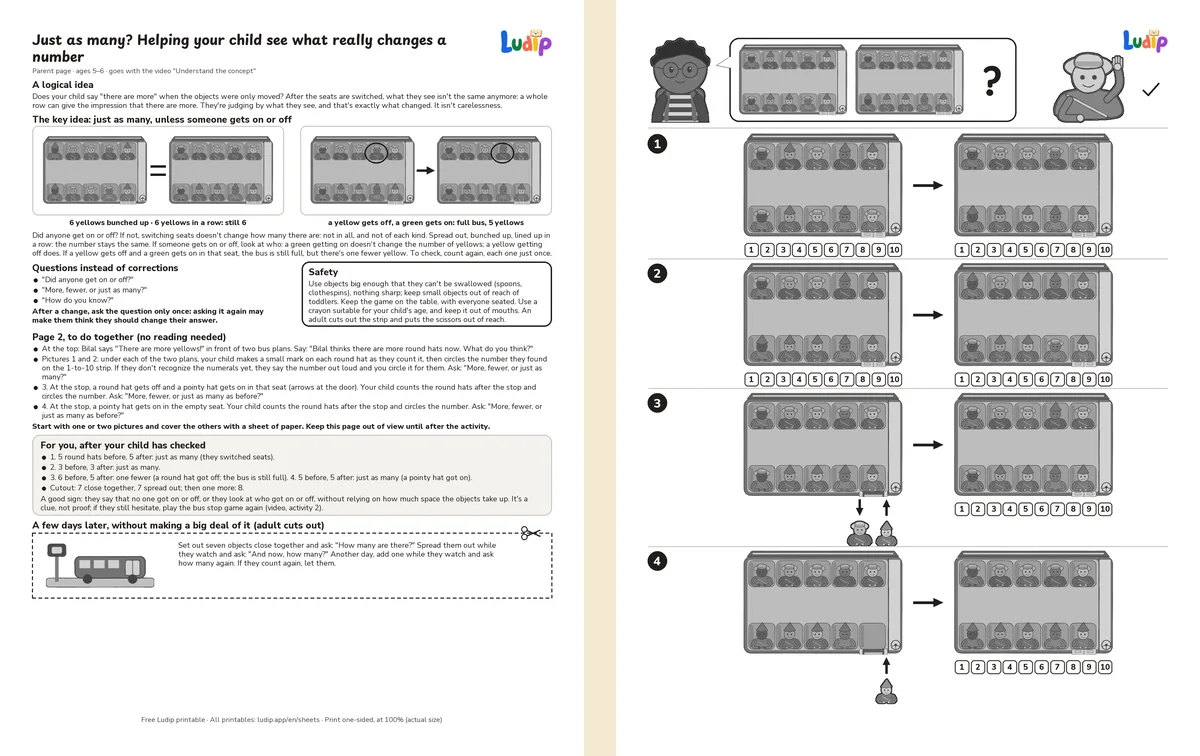 What changes a number · Ages 5–6
Just as many?
Help a 5–6 year old see what really changes a number.
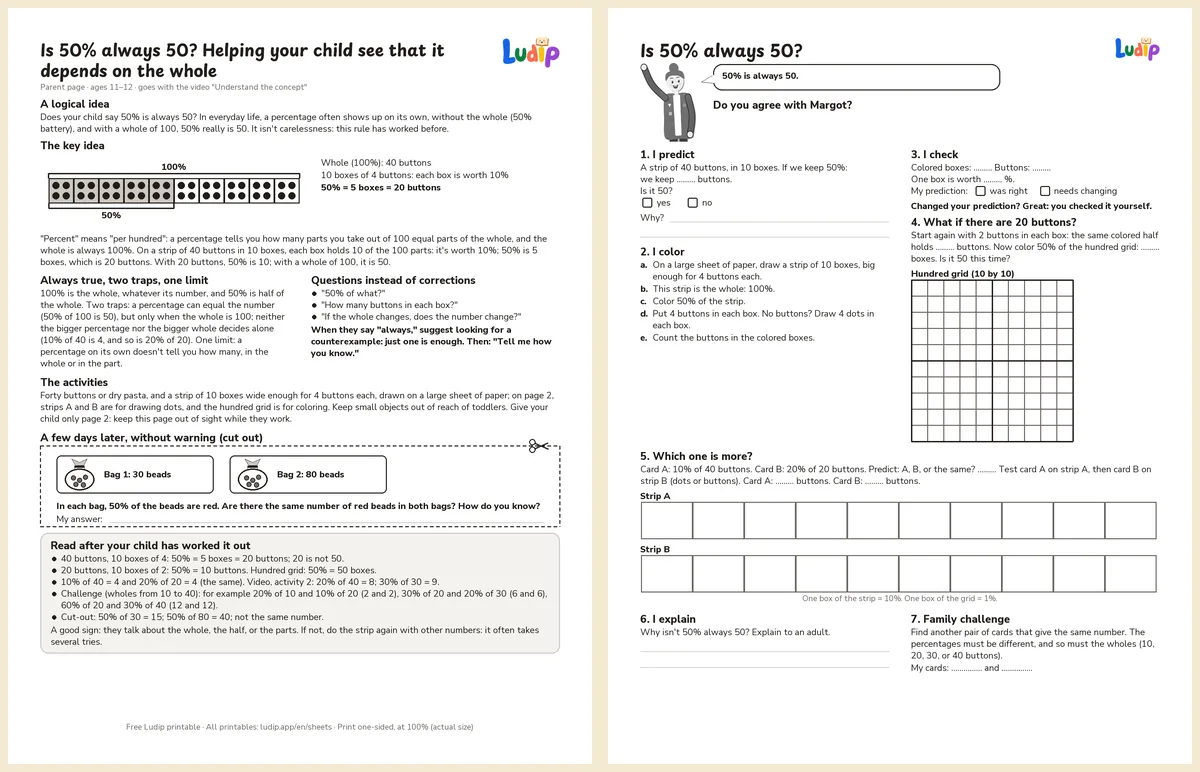 Percentages · Ages 11–12
Is 50% always 50?
Help an 11–12 year old see that a percentage depends on the whole.
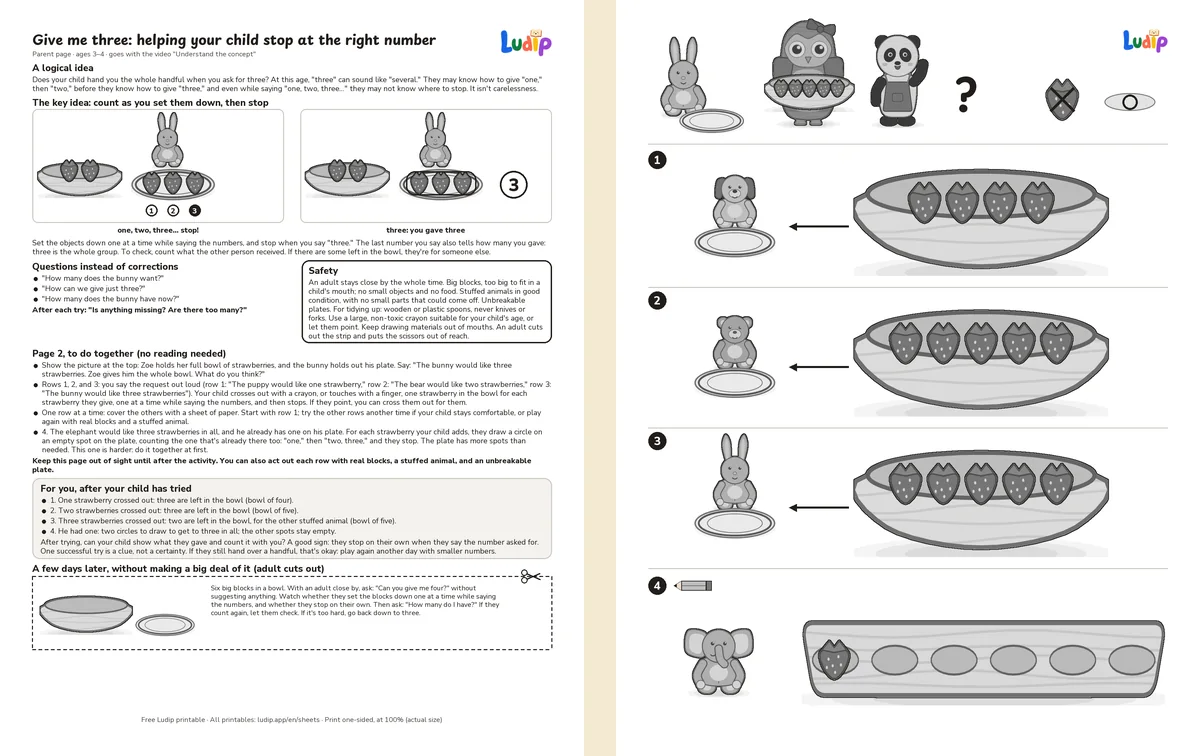 Giving a requested number · Ages 3–4
Give me three
Help a 3–4 year old stop at the right number when asked “give me three”.
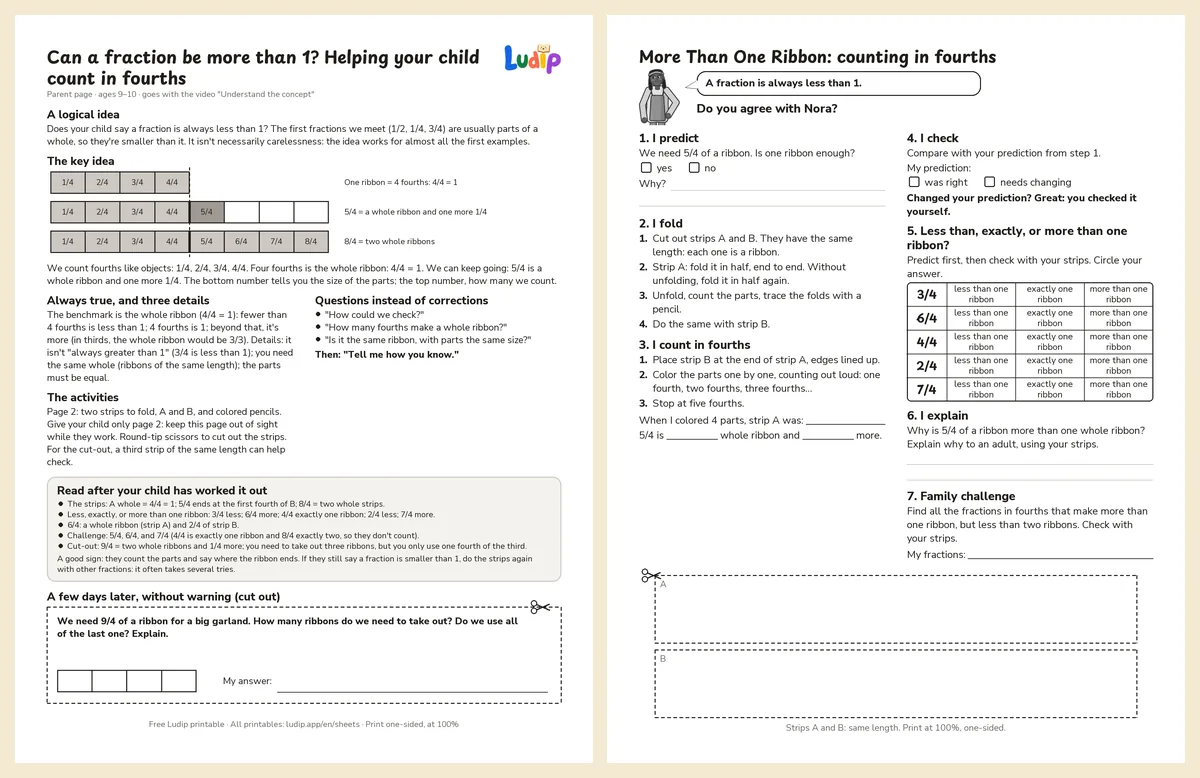 Counting in fourths · Ages 9–10
Can a fraction be more than 1?
Help a 9–10 year old count in fourths and see that a fraction can be more than 1.
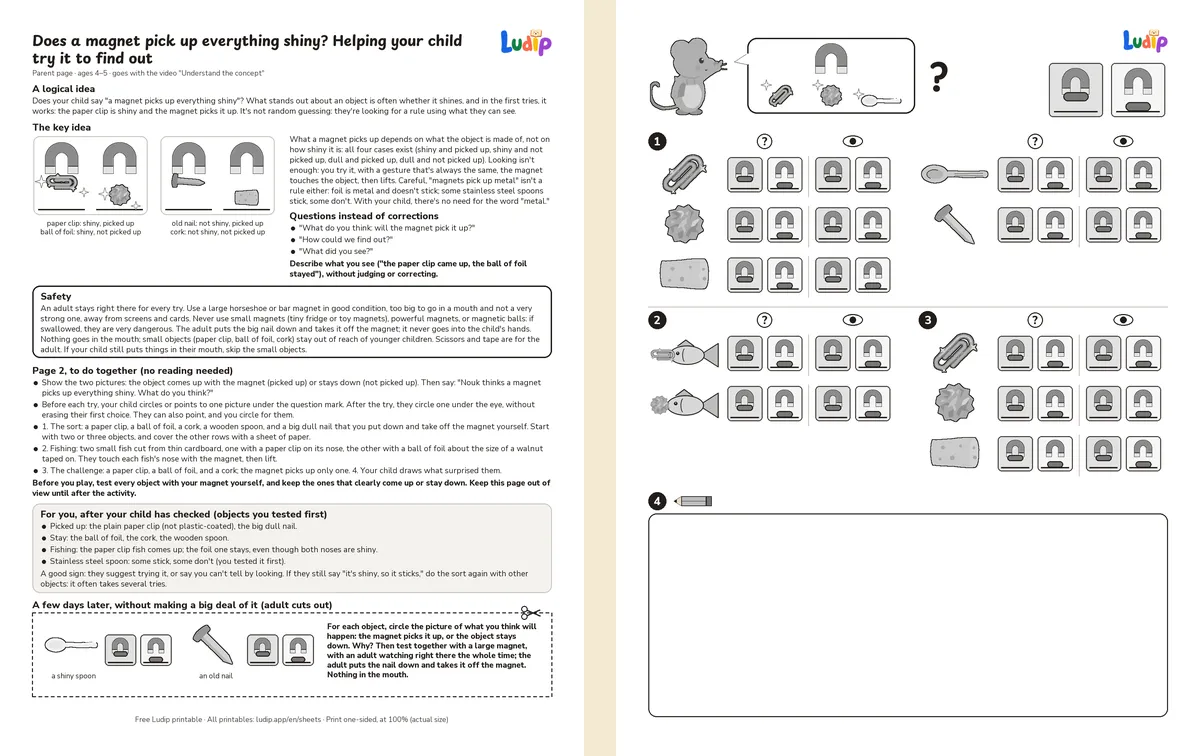 Science · Ages 4–5
Magnet or not?
Explore with a 4–5 year old what a magnet picks up.
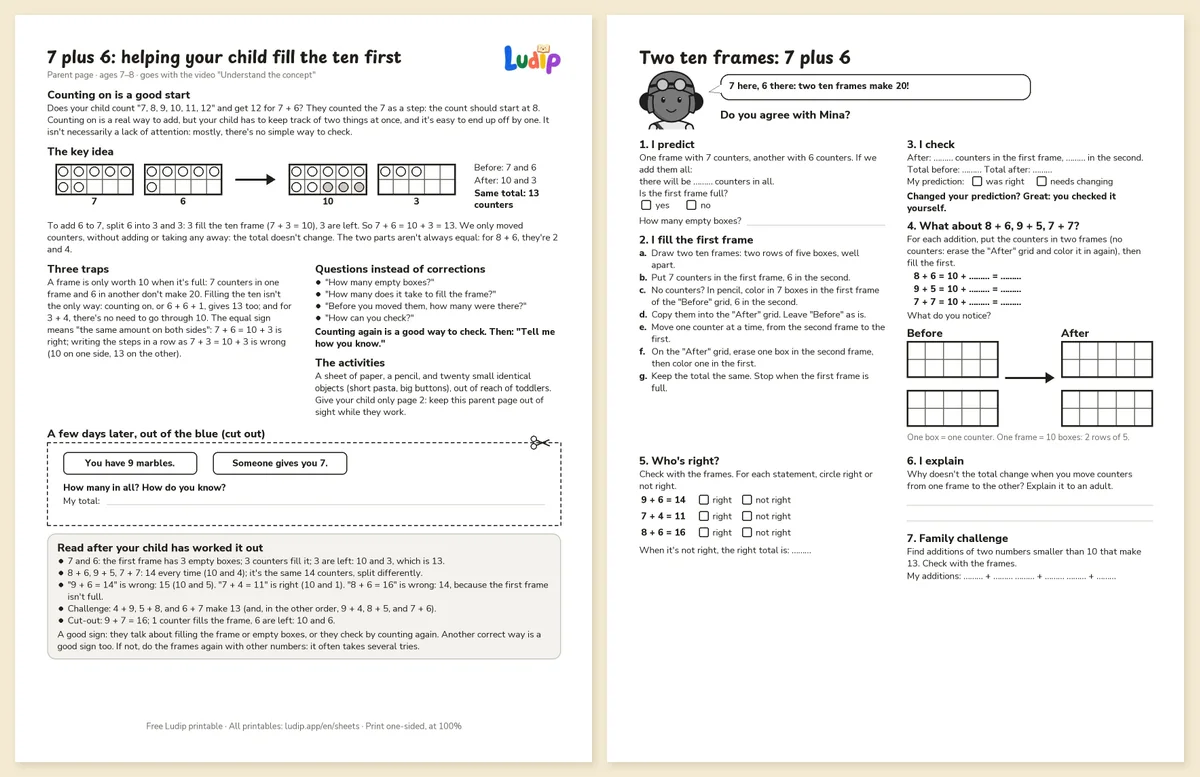 Making a ten · Ages 7–8
7 + 6: what if we filled the ten first?
Help a 7–8 year old add by filling the ten first.
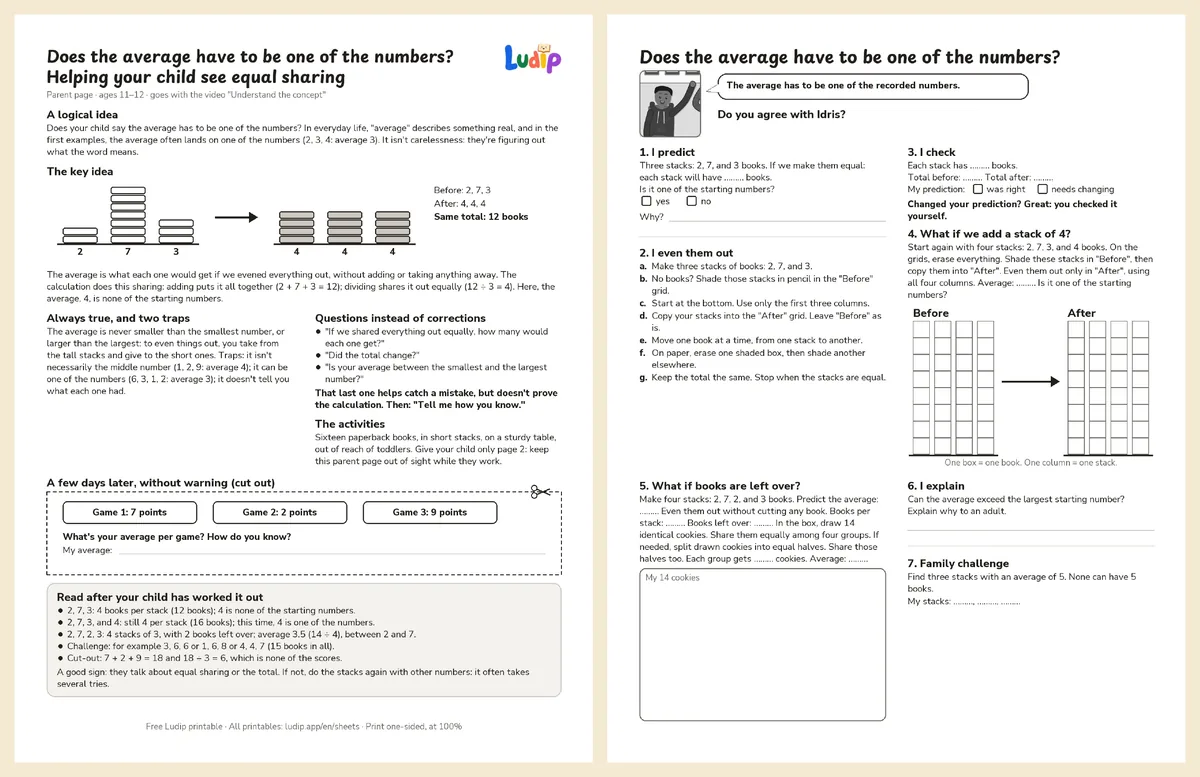 The average · Ages 11–12
Does the average have to be one of the numbers?
Even out stacks of books to see what the average means.
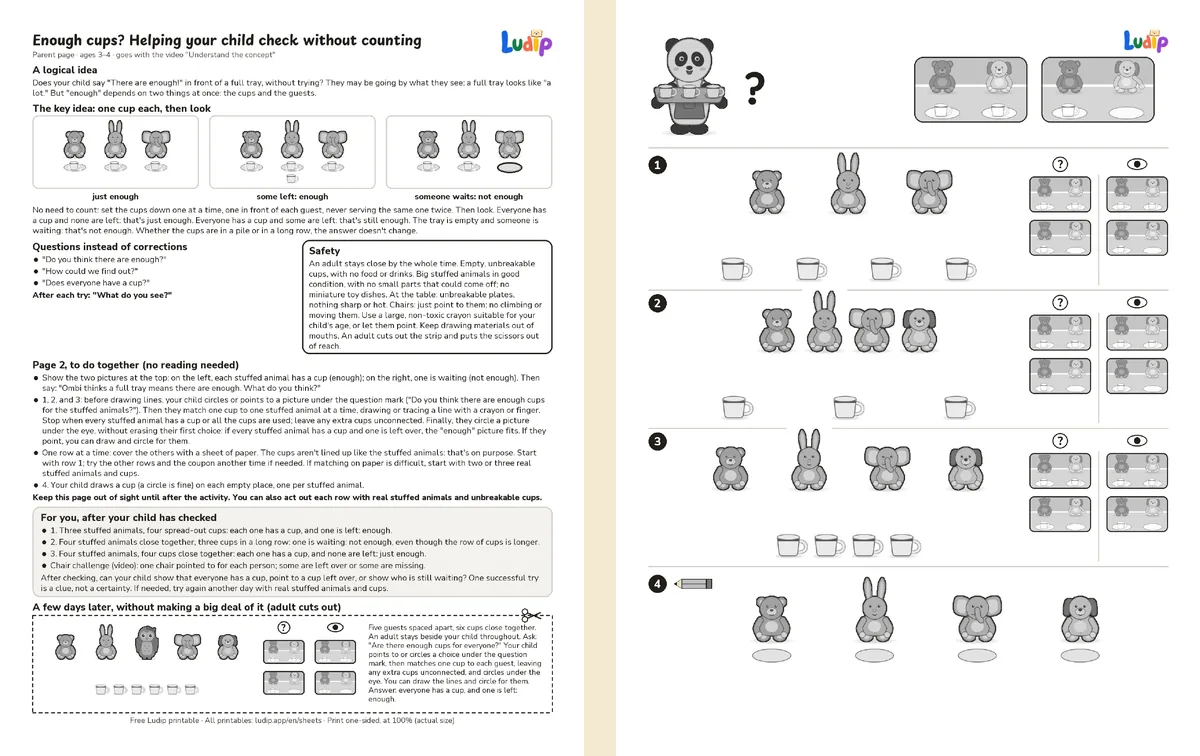 Comparing without counting · Ages 3–4
Enough cups?
Match a cup to each stuffed animal, without counting, to see whether there are enough.
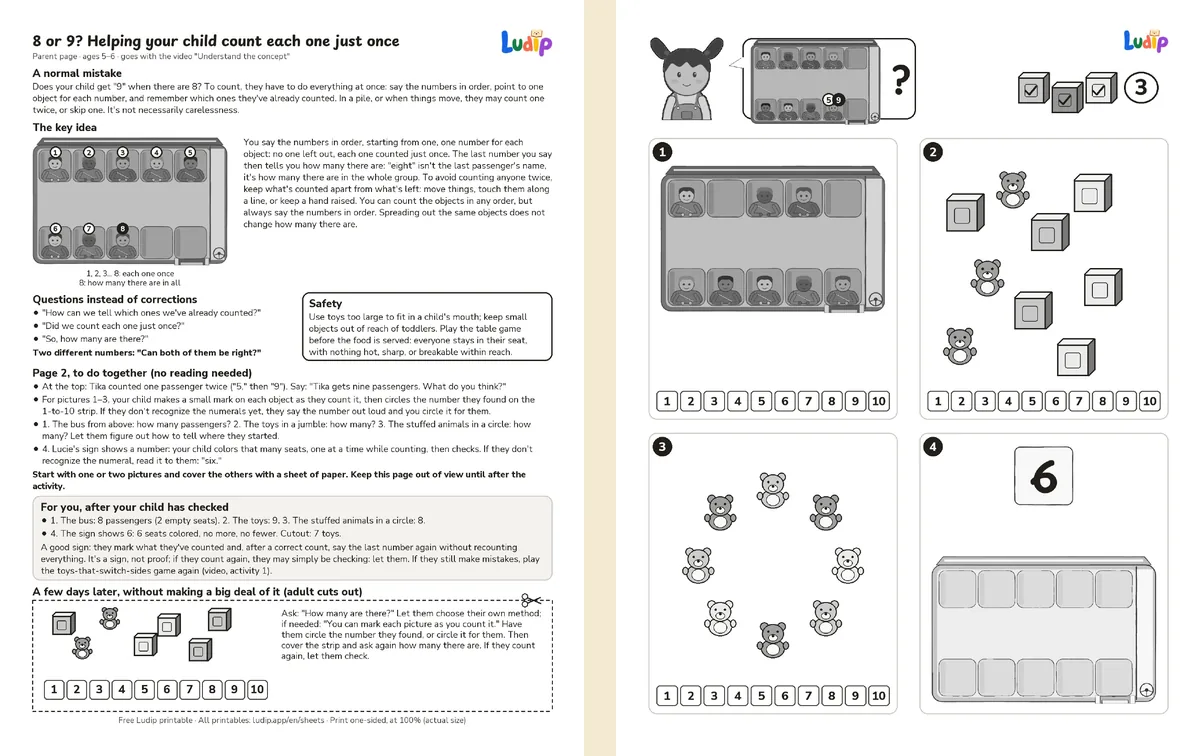 Counting · Ages 5–6
8 or 9?
Count objects by marking each one, so that none is counted twice.
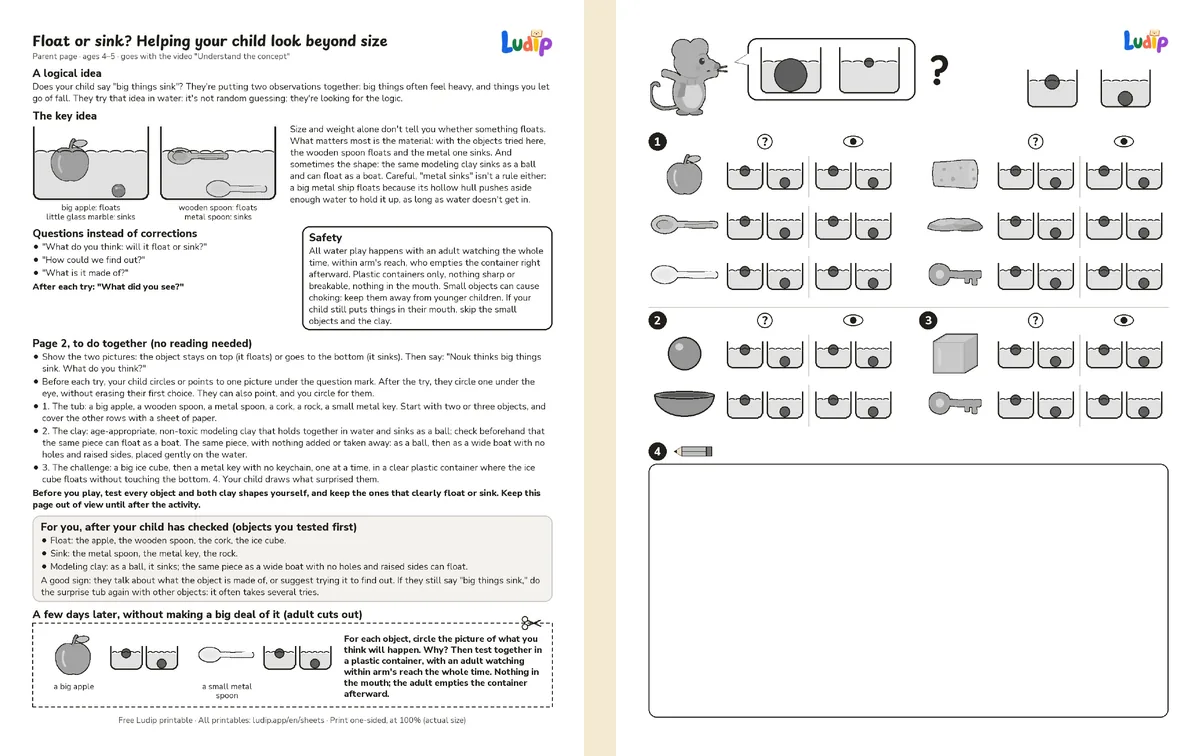 Science · Ages 4–5
Float or sink?
Try objects in water, with an adult beside you, to see what floats and what sinks.
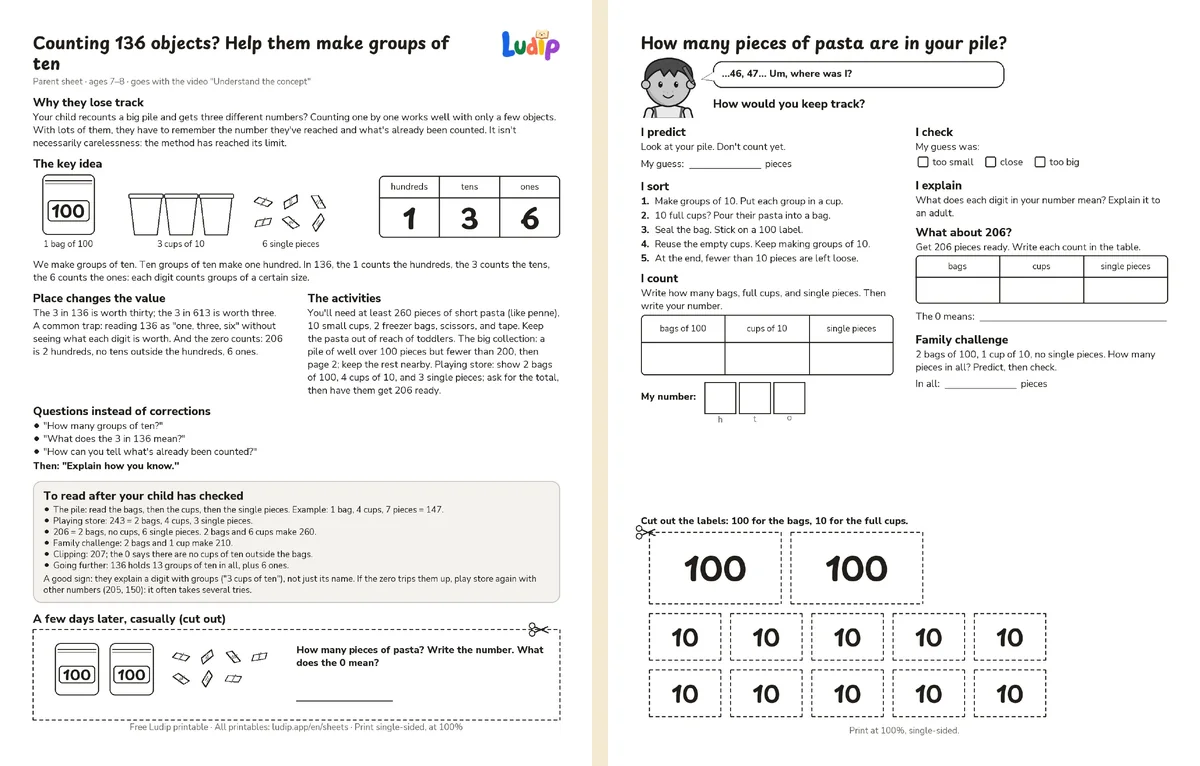 Tens and hundreds · Ages 7–8
Counting 136 objects?
Make groups of ten and of a hundred to count a big pile.
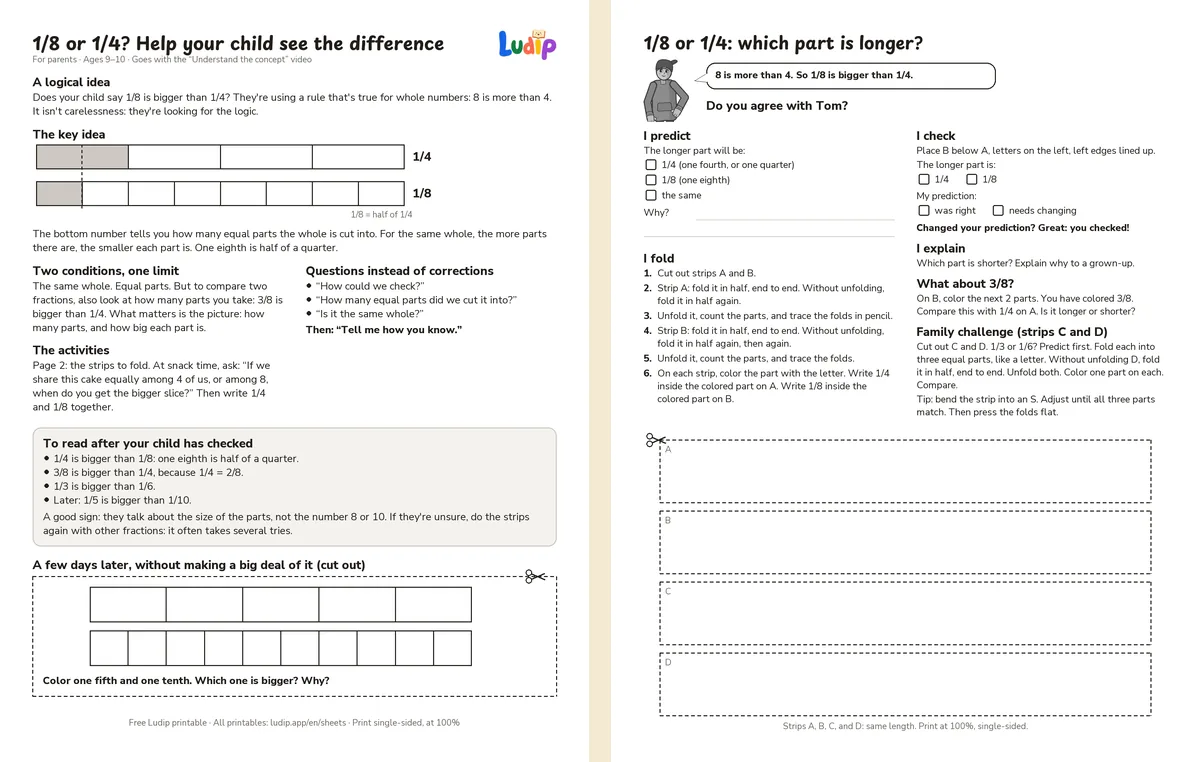 Fractions · Ages 9–10
1/8 or 1/4?
Compare two fractions with two paper strips.
Ludip: Math & Science Stories
Ludip is a collection of math and science comic series for kids. Ludip is coming to iPhone, iPad and Android.
Get notified at launch